

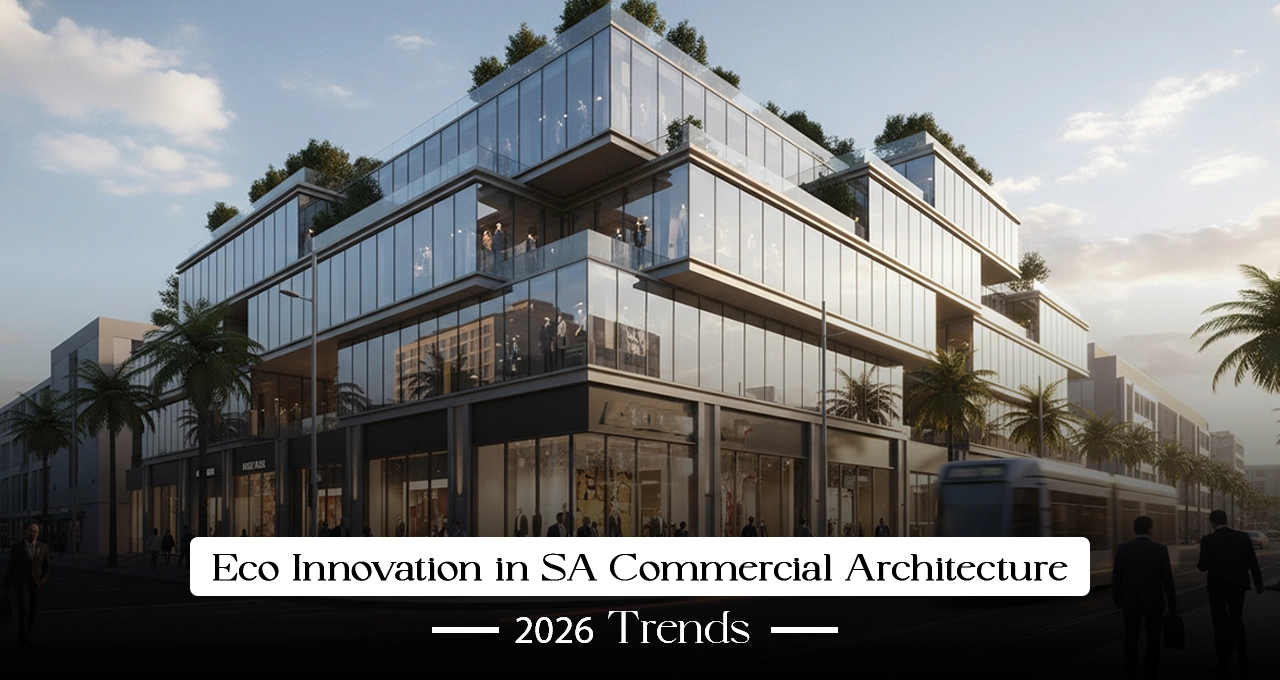
Green Commercial Buildings in South Africa: The Business Case
Green commercial buildings earn their cost back through three things: lower energy consumption, higher tenant retention and stronger asset value at sale or refinance. In South Africa a fourth has overtaken all of them, which is operational independence. A building that keeps trading through an outage or a water restriction is worth more than one that does not.
That is the commercial argument, and it is the one that gets green commercial buildings approved. The environmental case is real, but it rarely signs off a budget on its own.
What makes a commercial building genuinely efficient?
The envelope and the plan come before any of the systems. Because a correctly oriented, well shaded and properly sealed building needs smaller plant, it costs less to buy, less to run and less to replace.
- Orientation and shading. Controlling solar gain on the east and west elevations does more for cooling load than any equipment specification.
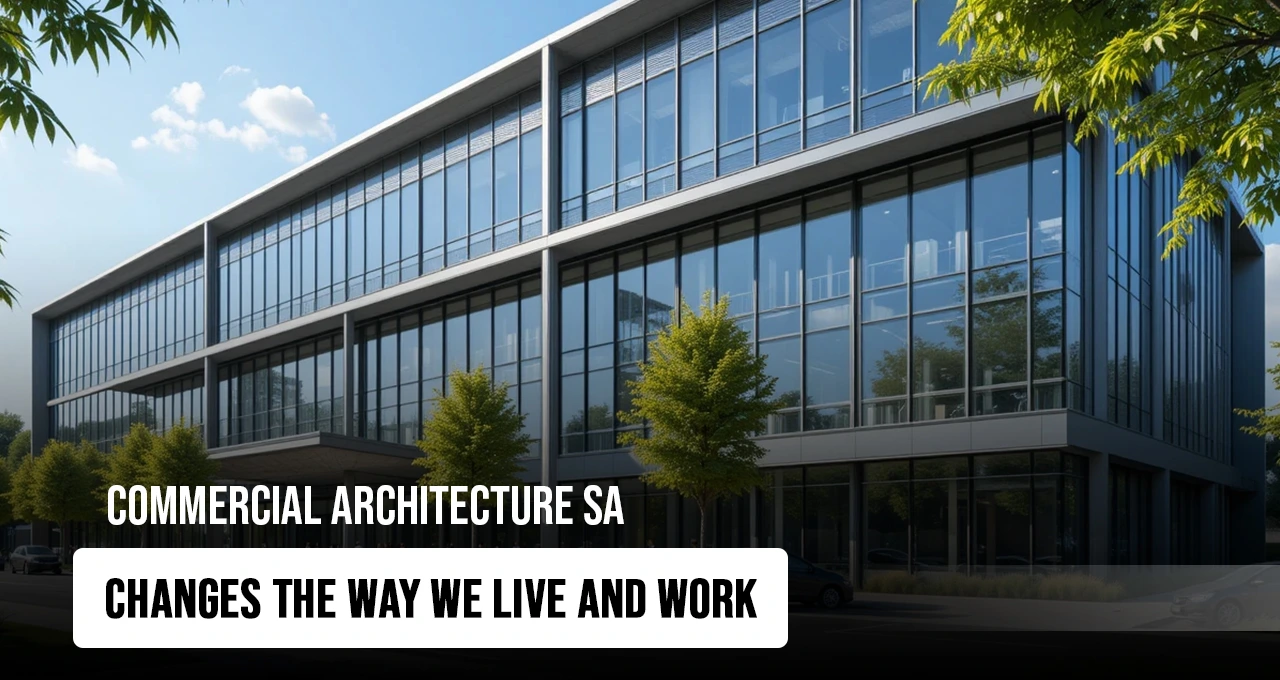
- Glazing ratio and performance. Daylight without heat, using high performance glass and considered proportions rather than full-height glass on every face.
- Thermal envelope. Insulation and airtightness, which in commercial work frequently carry the greatest untapped gain.
- Efficient services. Correctly sized HVAC, LED lighting on daylight and occupancy control, and metering that shows where consumption goes.
- Water. Rainwater capture, efficient fittings and greywater reuse, which we design into the drainage from the outset.
- Generation and storage. Photovoltaics and batteries, which we size against a building that already consumes less.
Why does daylight affect the financial case?
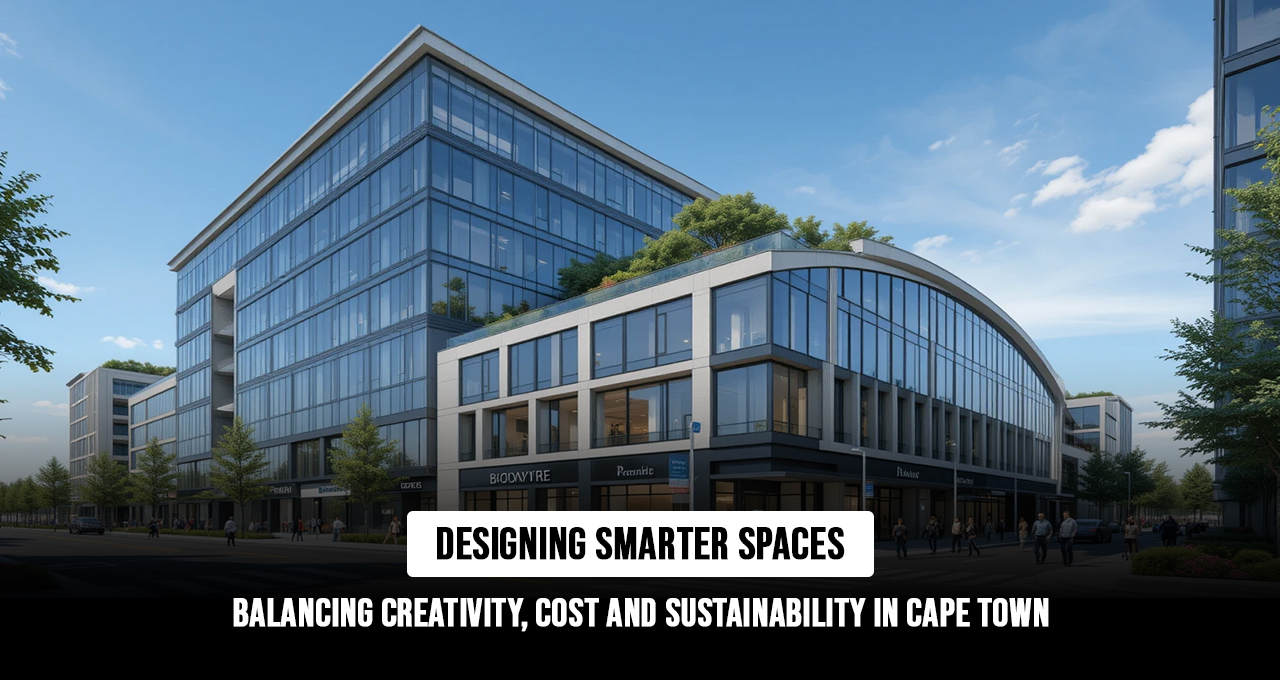
Because it affects the tenant. Daylight and outlook drive occupant satisfaction and productivity, so in an office market where tenants can choose, buildings that are pleasant to occupy hold their tenants longer.
Vacancy is the largest single cost in a commercial asset. Design that reduces it outperforms design that shaves running costs, which is why green commercial buildings are best evaluated on retention rather than on utility bills alone.
How do green commercial buildings perform on resale?
Certified, demonstrably efficient buildings finance, let and sell more easily. Institutional buyers and corporate tenants increasingly carry environmental reporting obligations of their own, so a compliant building makes for a shorter conversation and an uncertified one a longer negotiation.
In practice this shows up as reduced time on market and fewer conditions attached to an offer.
Where should the budget go first?
- Orientation and massing. Free at concept stage, and it caps everything that follows.
- Envelope. Shading, glazing performance and insulation.
- Right-sized services. Made possible by the two above.
- Metering and controls. Inexpensive, and the only way to manage consumption once occupied.
- Generation and water storage. Sized against real, reduced demand.
Following that order is what makes green commercial buildings affordable. Reversing it is what makes them expensive.
Does this apply to an existing building?
Yes, and retrofit is where much of the South African opportunity sits. We introduce shading, glazing upgrades, lighting, controls, metering and photovoltaics into an occupied building in phases, so trading continues while each stage funds the next.
Frequently Asked Questions
What is a green commercial building?
A building that consumes less energy and water, provides good daylight and air quality, and operates with reduced reliance on municipal supply. Measurement or formal certification then verifies it.
Do green commercial buildings cost more to build?
The design decisions cost nothing at concept stage. Where a project needs additional capital, it sits in envelope performance and generation, which we assess against reduced running cost and improved tenant retention.
What certification applies in South Africa?
Green Star ratings from the Green Building Council South Africa set the benchmark for commercial property. In addition, many buildings now require an energy performance certificate.
Can an existing commercial building be upgraded while occupied?
Yes. We phase the work around operations so tenants keep trading, and sequence it to contain disruption.
What delivers the fastest return?
Lighting, controls and metering typically return quickest. After that come shading and glazing on the elevations carrying the highest solar gain.
Kevin Els Architects designs and documents commercial buildings across Gauteng and the Western Cape, and provides project management and contract administration through construction. To discuss a new commercial building or an upgrade to an existing asset, get in touch to speak to Kevin directly. The Green Building Council South Africa sets the environmental performance standards that South African buildings work to.